This video does not give an accurate depiction of its true colour, please use the images as a better example of colour

Regency mahogany library table Now Sold

Regency mahogany library table Now Sold

Regency mahogany library table Now Sold
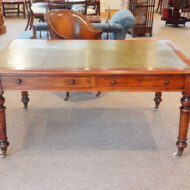
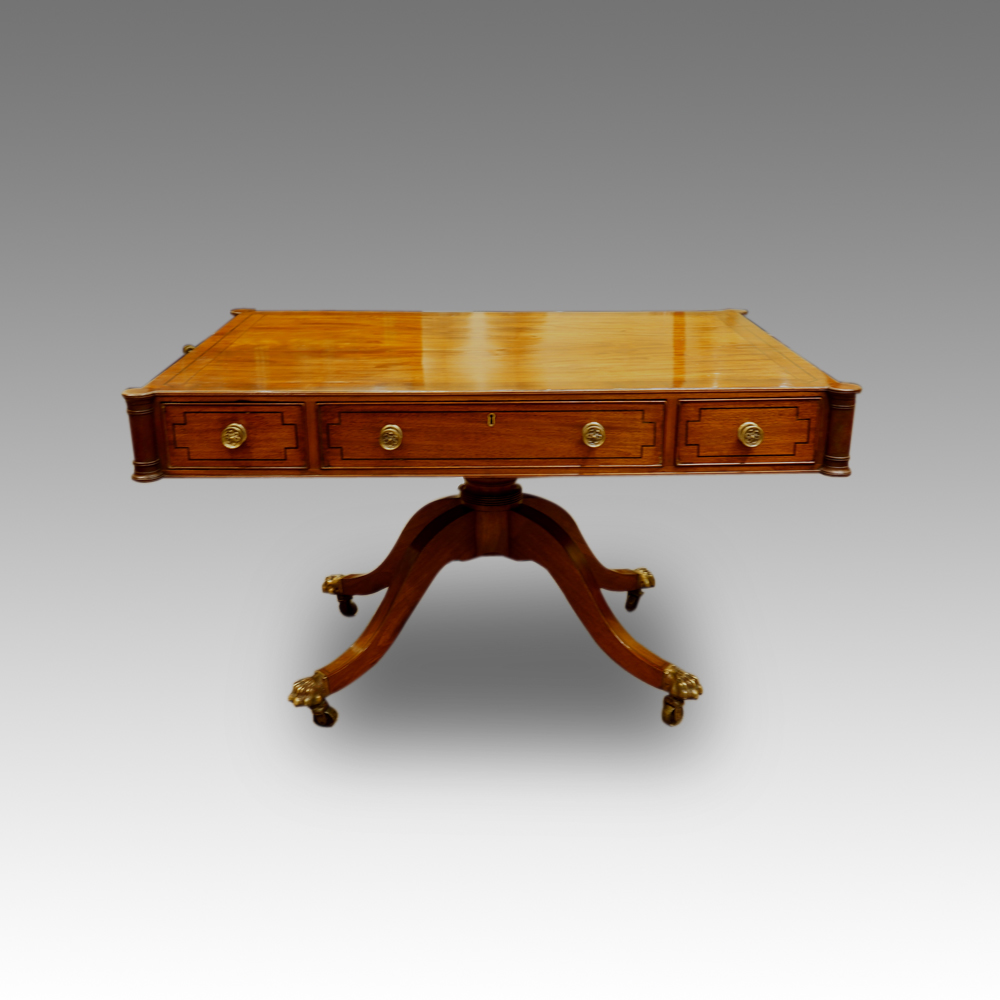
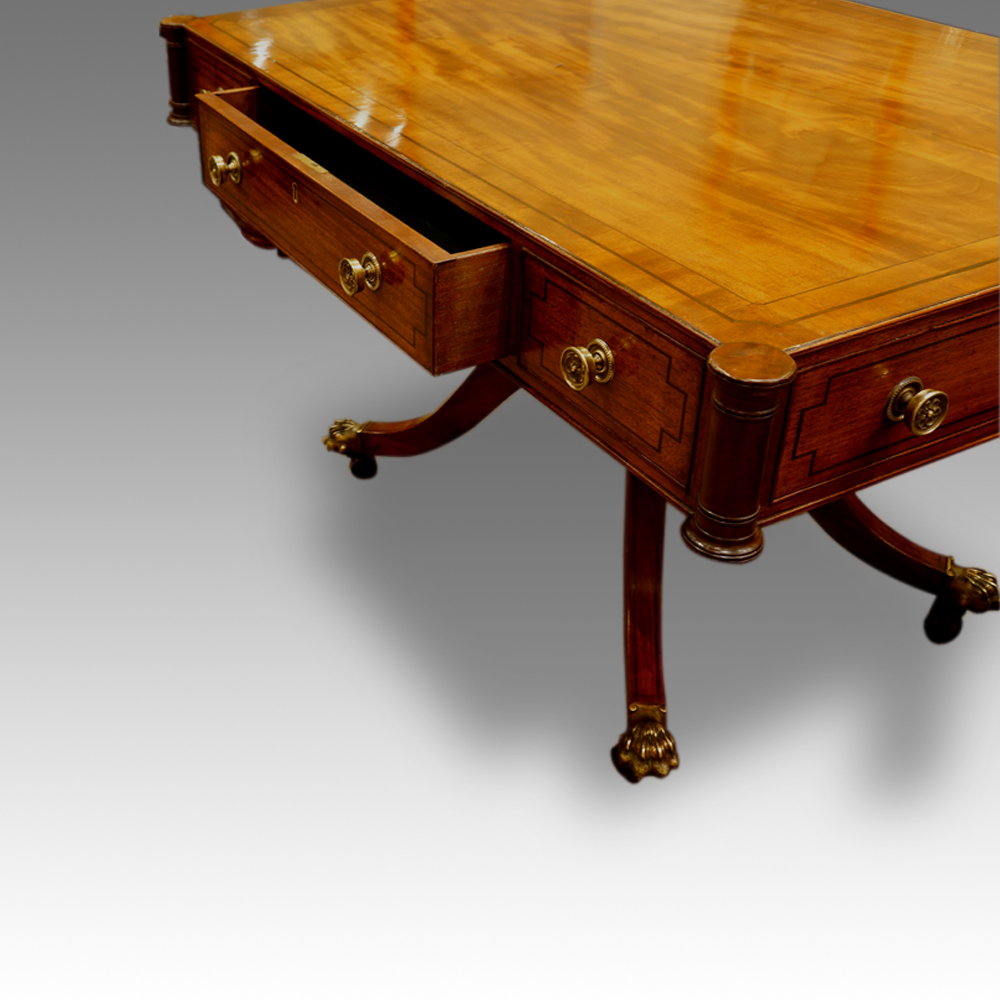
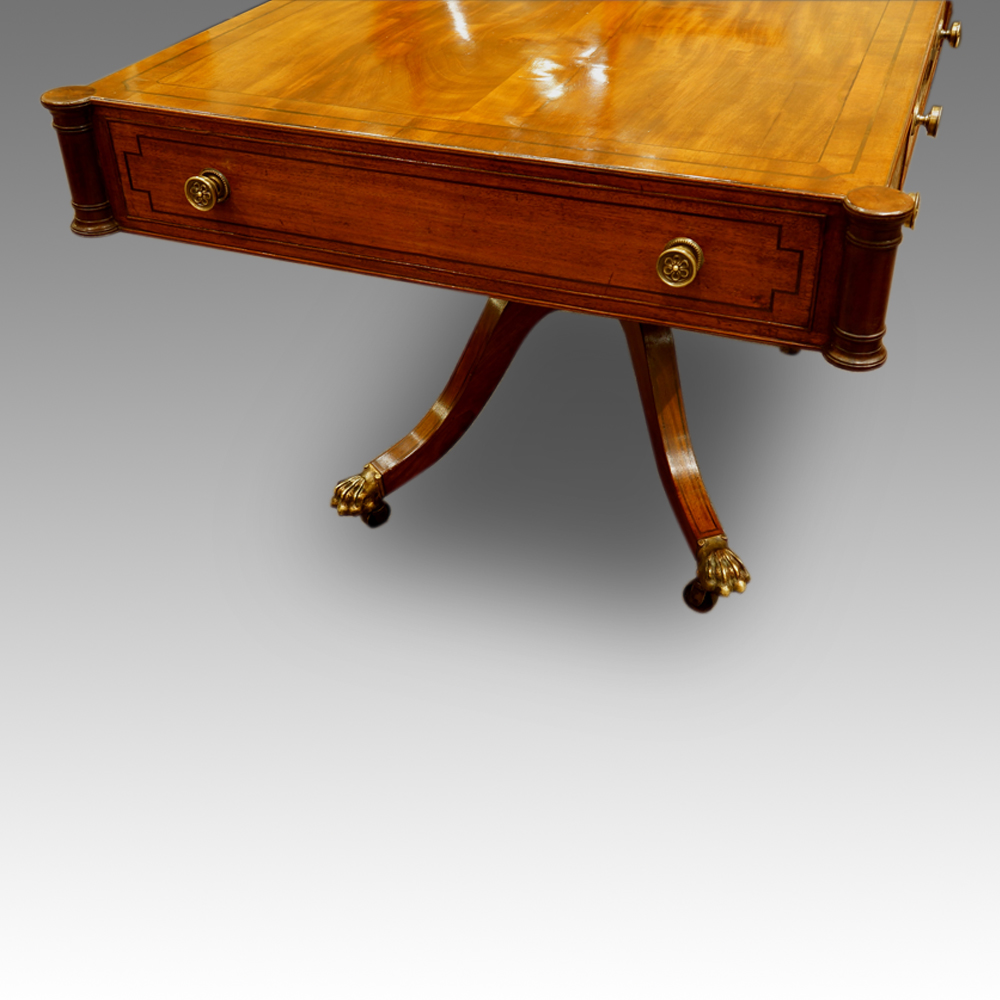
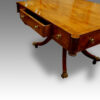
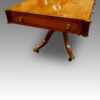
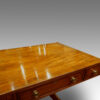
Here we have this library table that would have been made circa 1820
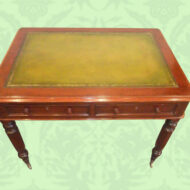
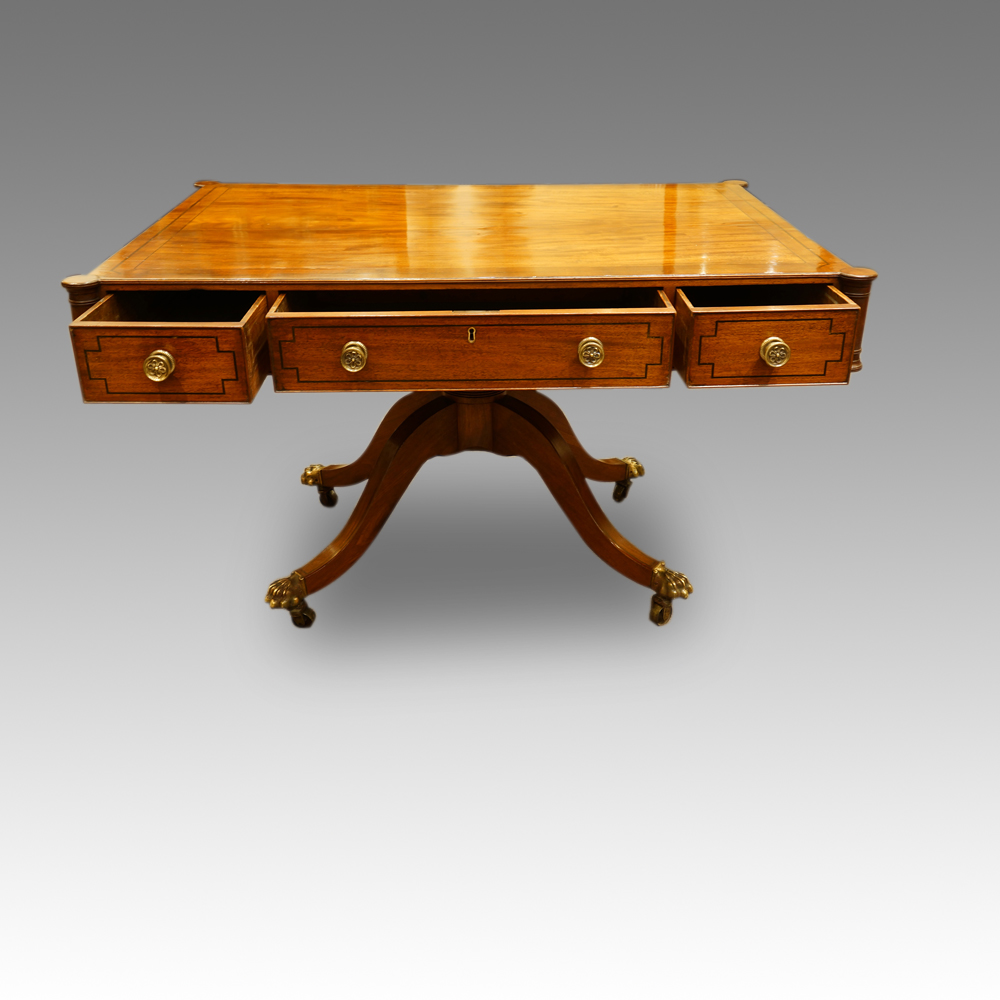
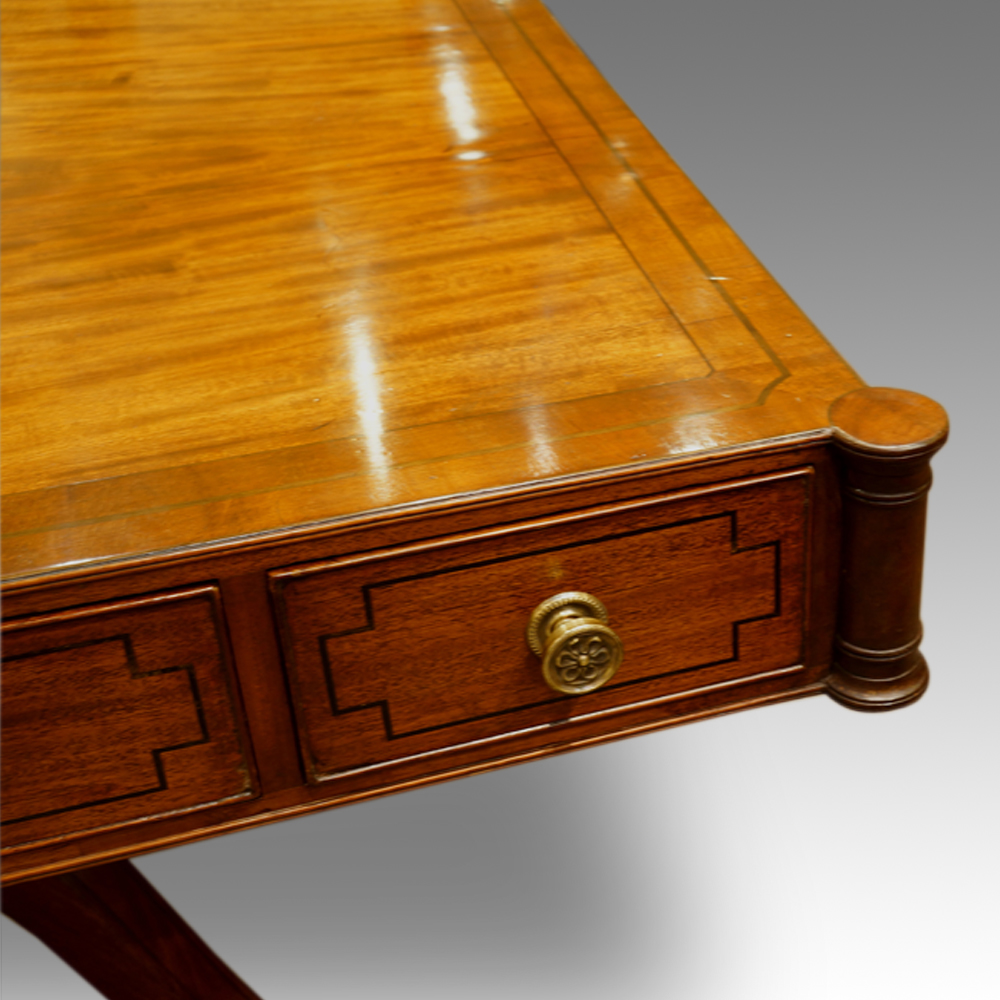
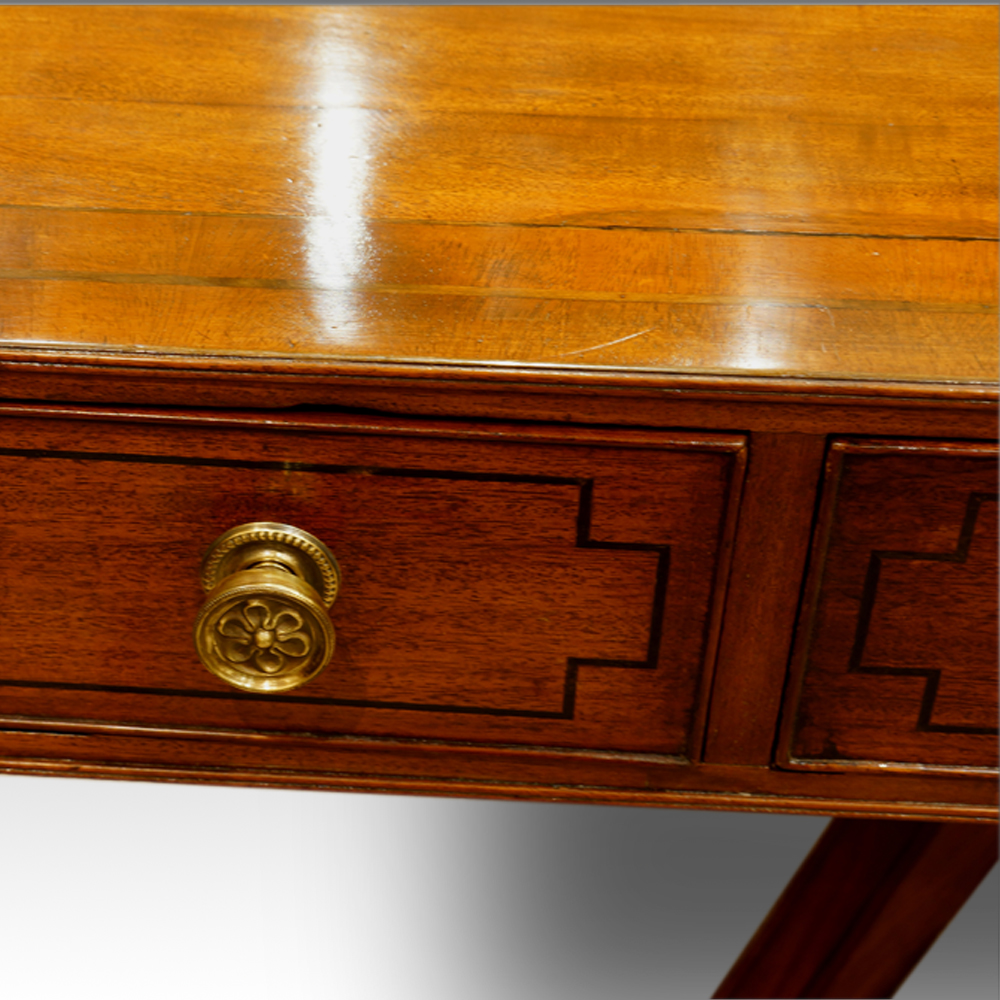
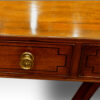
This table is fitted 2 small drawers to each side of the large centre drawer, to the rear it has 1 large central drawer with dummy drawers to each side and dummy drawes to each end. All the drawers are strung with black line inlays, and it is a popular belief that the was black line was in memorium to the death of Nelson.
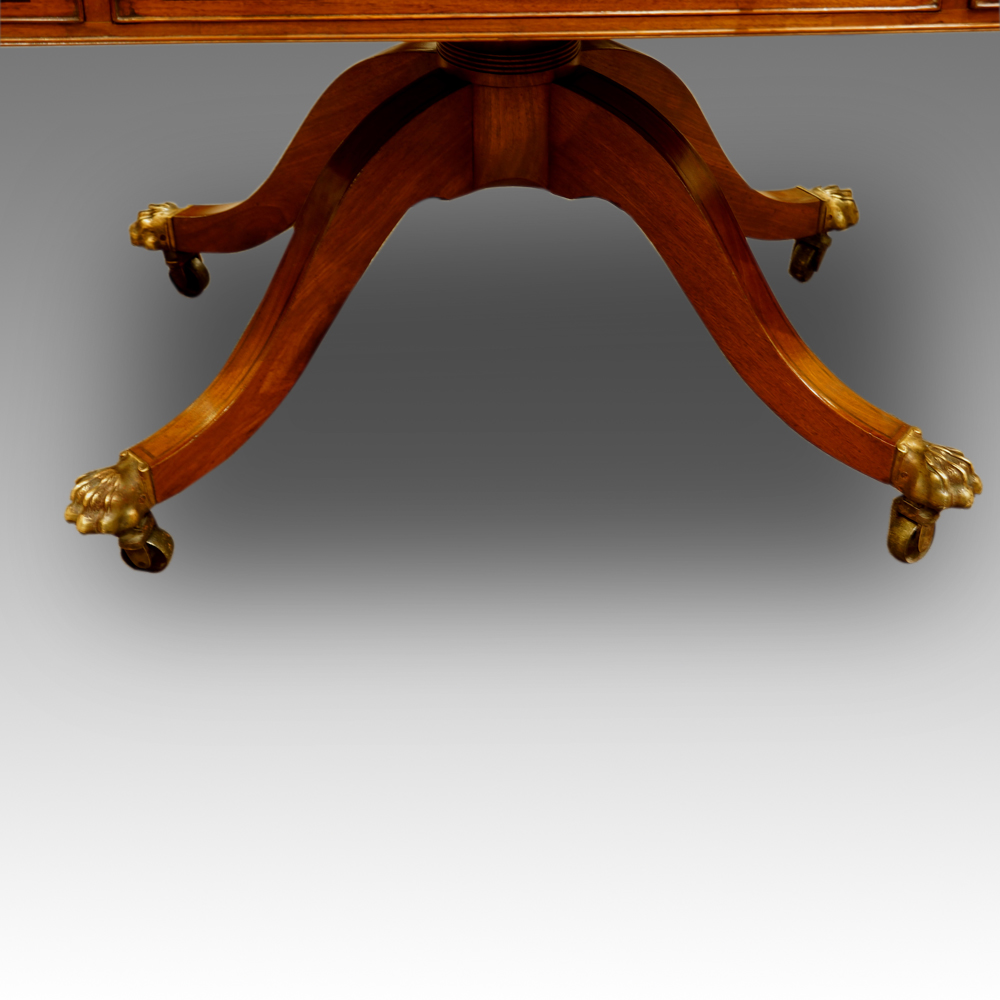
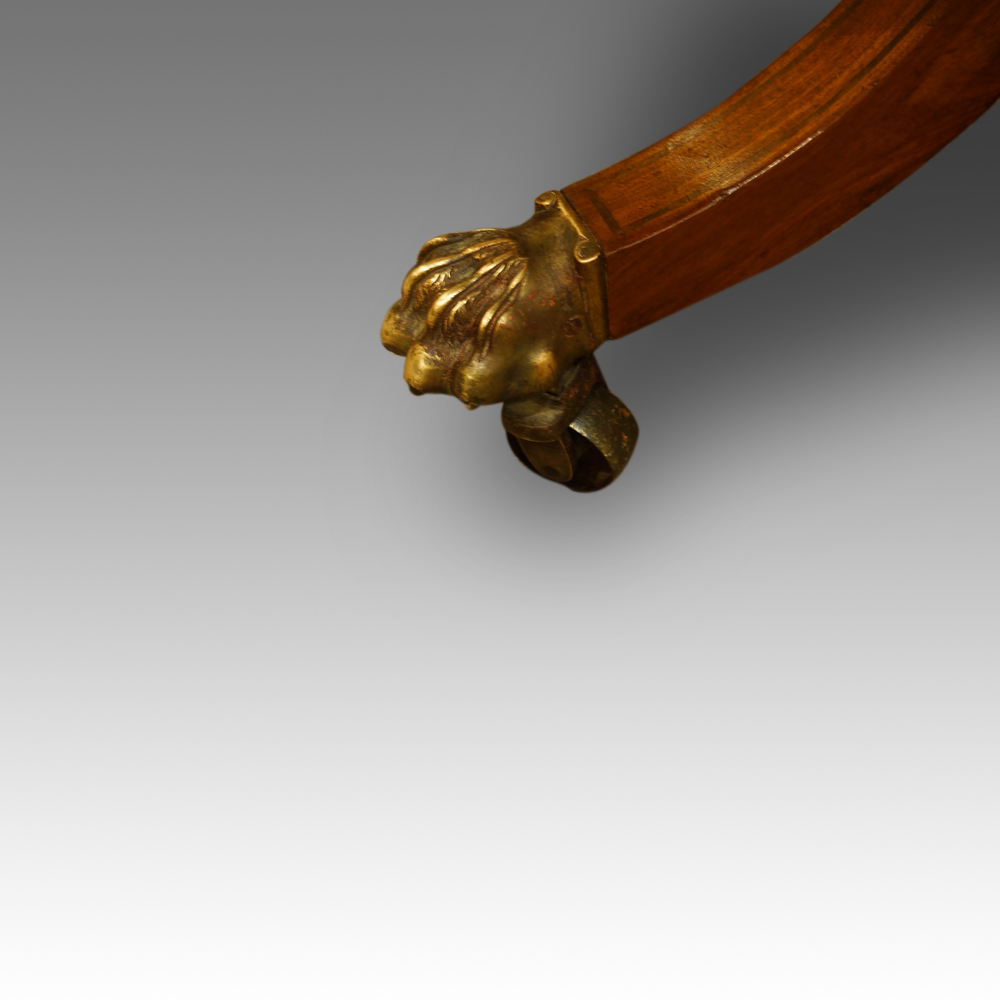
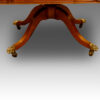
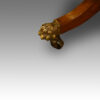
The table stands on a pedestal turned column with 4 splay legs that have brass paw toes with large brass castors below.
The top having a turned turret to each corner, that makes the table more dramatic in its look. The top surface with double cross-banding and line stringing
122cms wide (4 feet)
86cms deep (33 3/4ins)
75cms high (23 1/2ins)
The Regency period was a time when George III was deemed unfit to rule and his son ruled as a proxy Prince Regent. On the death of George III in 1820, the Prince Regent became George IV. The term Regency (or Regency era) can refer to various stretches of time; some are longer period than the decade of the formal Regency which lasted 1811–1820. George Augustus Frederick, Prince of Wales, was 48 when he was appointed Prince Regent to his father, King George III. The Regency would be a convenient label for a brilliant period in architecture and the arts, but the prince himself was not highly regarded. A heavy drinker and a compulsive gambler. He was known to sing and play the cello and he was a patron of the arts. Sadly he was considered deeply untrustworthy and his hatred of his father led him to ally himself with the Whig opposition in Parliament. He involved himself in a secret marriage with Maria Fitzherbert in 1785, which he knew was illegal and he kept lying about. In 1795 he married Princess Caroline of Brunswick, though he loathed her on sight.